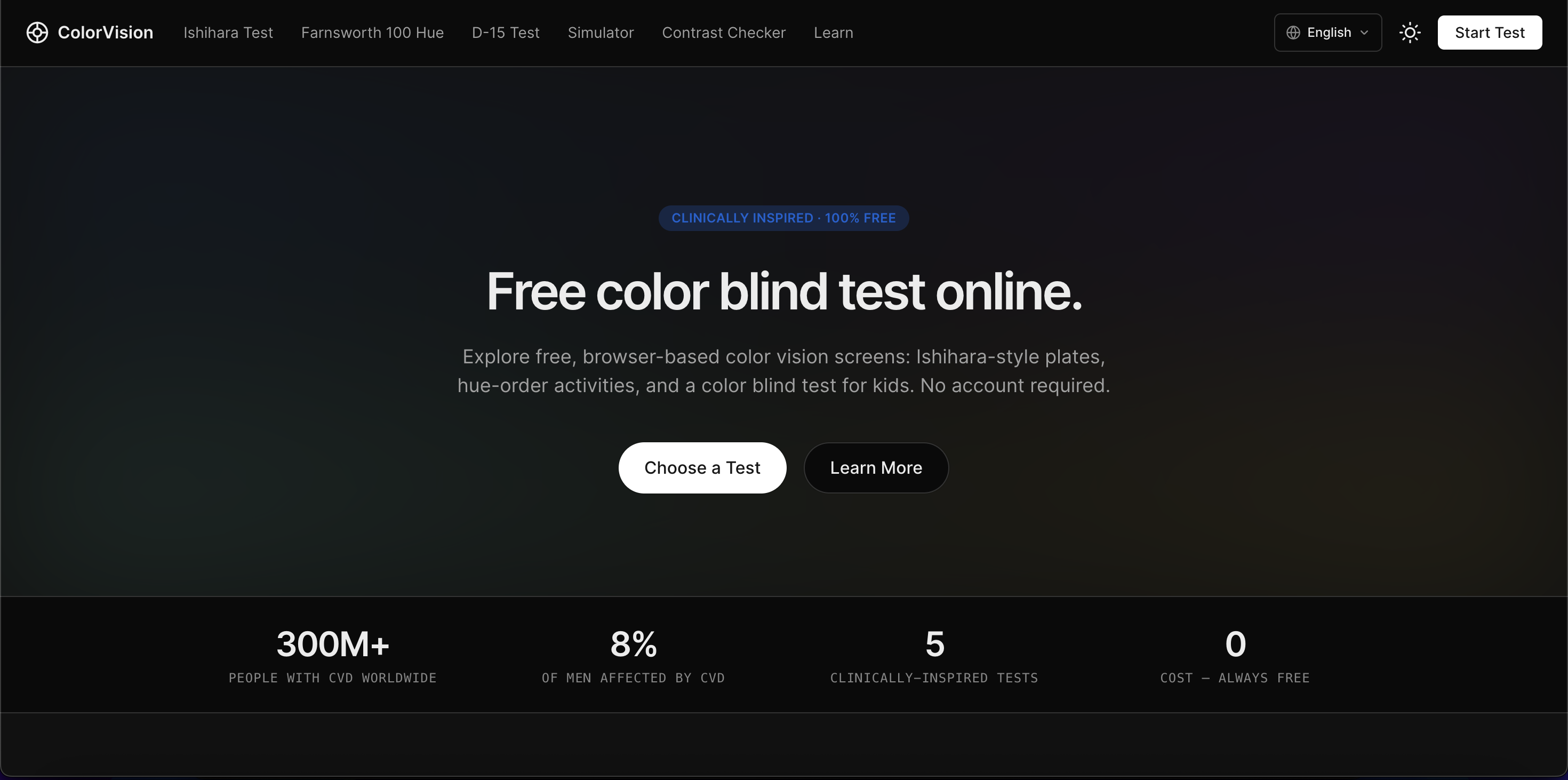
Color vision deficiency affects millions of people, yet many go years without understanding why certain colors blend together or why everyday tasks—like reading charts, matching clothing, or interpreting traffic signals—can feel unnecessarily difficult. ColorVision exists to make preliminary color vision screening fast, accessible, and entirely free online, so anyone can explore trusted test formats from any modern browser.
ColorVision is a web-based color blind test platform built around established screening methods such as Ishihara plates, hue ordering, and the D-15 arrangement test. Rather than requiring an appointment, special hardware, or a downloadable app, it presents carefully designed visual tests that help users identify possible red-green, blue-yellow, or general color vision deficiencies. The experience is designed for clarity: simple instructions, responsive layouts, and immediate feedback after each activity. It is ideal for individuals who are curious about their color perception, parents checking a child's color vision, educators supporting inclusive classrooms, or professionals in design, engineering, transport, and other fields where color discrimination matters. While the results can offer useful insight, ColorVision is a screening tool rather than a diagnostic medical device; users with concerns should follow up with an eye-care professional.
Key Features
-
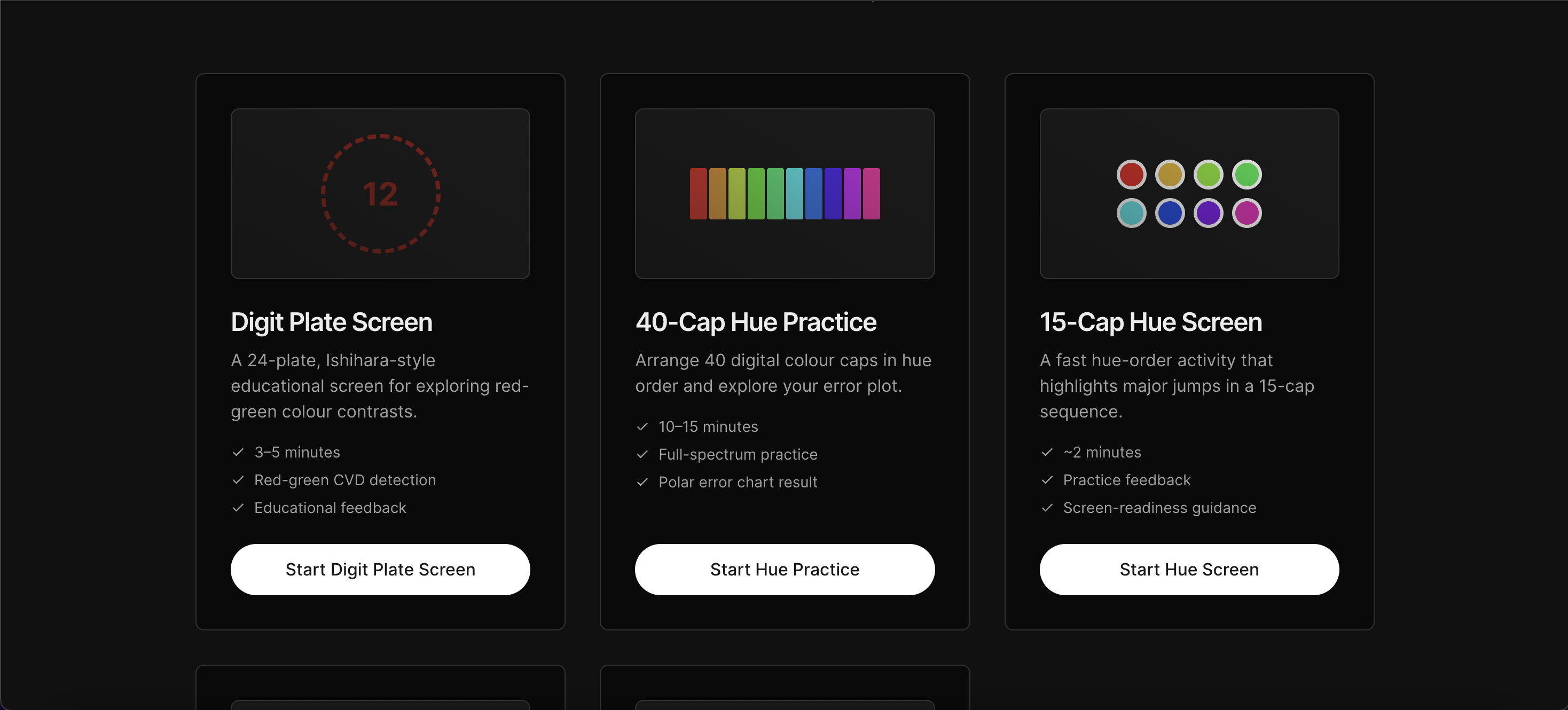
Ishihara Color Test: Work through classic Ishihara-style plates that present numbers or patterns hidden within colored dots. This format is widely used for red-green color vision screening and helps surface common deuteranomaly, protanomaly, and related deficiencies in a familiar, accessible way.
-
Hue Test and Hue Ordering: Arrange color swatches in a natural progression to reveal how your eyes distinguish subtle shifts in hue. This activity can highlight areas where color discrimination is weaker and provides a more nuanced view than simple pass/fail plate tests.
-
D-15 Color Arrangement Test: The D-15 test asks users to order colored caps or swatches into a smooth sequence. It is useful for detecting broader color vision issues and can complement Ishihara and hue-based screening by showing patterns of confusion across the color spectrum.
-
Instant, Browser-Based Results: Complete tests directly on the web with no account creation, downloads, or special equipment. Results appear immediately after each test, making it easy to retake activities, compare outcomes, and share findings with a doctor, optometrist, teacher, or employer if needed.
-
Child-Friendly and Accessible Design: ColorVision includes a color blind test for kids and a clean, responsive interface that works across desktop and mobile browsers. Large elements, clear instructions, and forgiving navigation help younger users and non-technical visitors complete screening activities with confidence.
-
Practical Color-Vision Tools: Beyond screening, the site offers practical resources and tools for understanding color vision deficiency, supporting accessible design choices, and learning how different types of color blindness affect daily perception.
Get Started
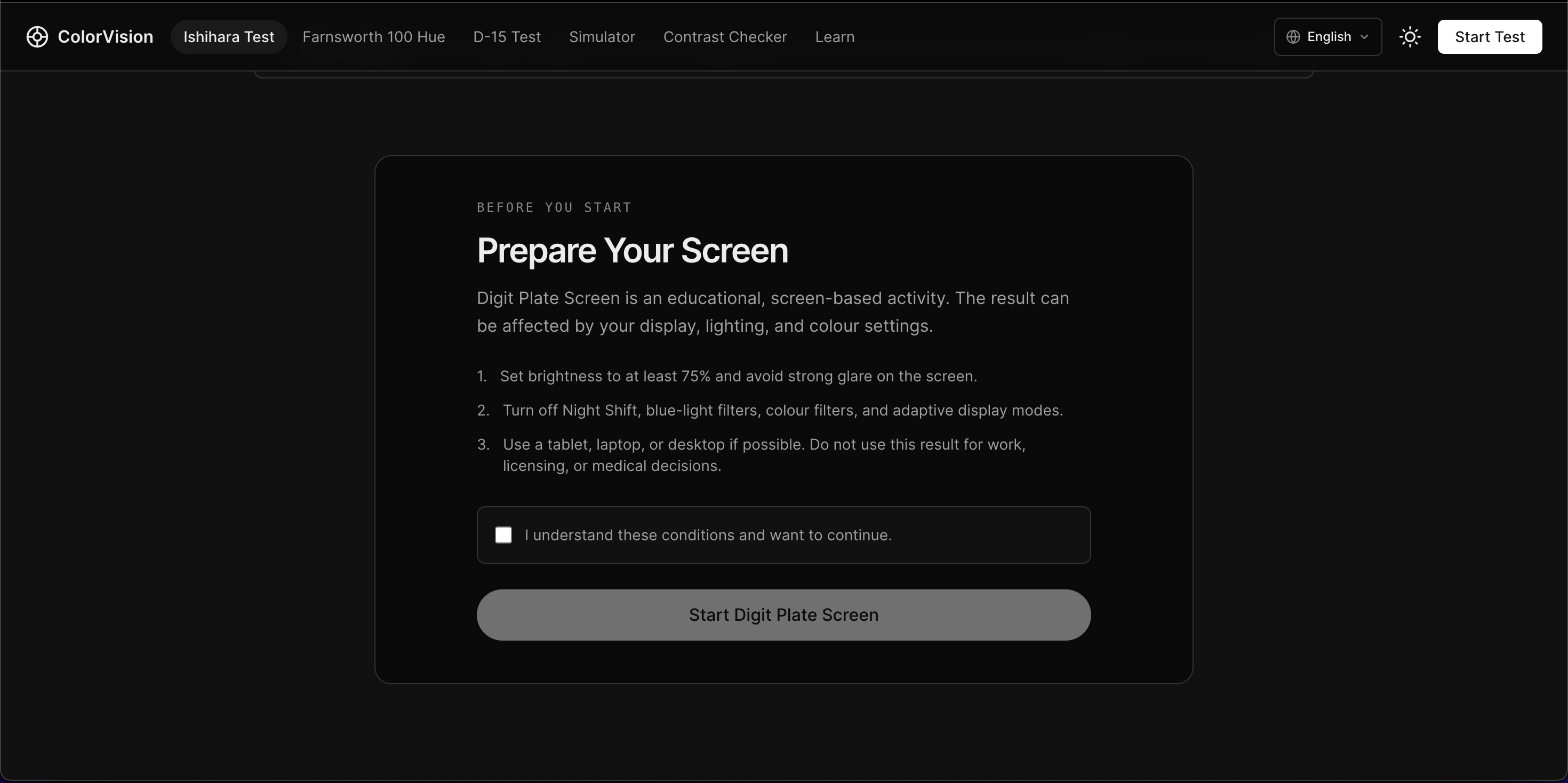
Getting started with ColorVision is straightforward. Visit colorsighttest.com, choose a test—such as the Ishihara, Hue, or D-15 assessment—and follow the on-screen instructions. Most tests take only a few minutes, and you can complete them without creating an account. For best results, use a well-lit environment, avoid screen glare, and take breaks between tests if your eyes feel tired. The platform is free to use and available in multiple languages, making it accessible to a global audience. After completing a test, review your results and consider retaking it if you were distracted or unsure. If a result suggests a color vision deficiency, use it as a starting point for a conversation with a qualified eye-care professional rather than as a final diagnosis.