Navigating the complex landscape of food and nutrition information is a significant challenge for health professionals, developers, and informed consumers. Data is scattered across multiple sources—government databases, academic research, and open-source projects—each with different metrics, scoring systems, and levels of detail. This fragmentation makes comparative analysis, product development, and personal health tracking cumbersome and inconsistent. Food Benchmark exists to solve this by becoming the unified, authoritative hub for comprehensive food intelligence.
Food Benchmark is a sophisticated data aggregation and presentation platform that synthesizes nutritional information from the world's most trusted sources into a single, searchable interface. It leverages the Tufts Food Compass scoring system, the Open Food Facts database, USDA FoodData Central, and incorporates recognized frameworks like Nutri-Score, Health Star Rating, and NOVA classification. This isn't just another calorie counter; it's an analytical engine designed for depth, allowing users to compare foods based on preparation methods, understand the science-backed scoring behind their choices, and access a vast database of both whole foods and commercial products. For developers and businesses, it provides a structured data layer to build nutrition-focused applications, while for individuals, it offers unprecedented transparency into what they consume.
Key Features
-
Multi-Source Nutritional Intelligence: Food Benchmark's core power lies in its aggregation. It doesn't rely on a single dataset but harmonizes data from Tufts University's research-driven Food Compass, the collaborative Open Food Facts repository, and the official USDA database. This triangulation provides a more robust and complete nutritional profile than any single source could offer, covering everything from essential macronutrients to specialized scoring algorithms.
-
Advanced Comparative Analysis: The platform allows for detailed, like-for-like comparisons that account for variables often overlooked. As seen in the extensive seafood examples, you can compare "Halibut, baked or broiled, made with oil" directly against "Halibut, steamed or poached." This granularity is critical for nutritionists, chefs, and health-conscious individuals making decisions based on specific cooking methods and ingredient additions, moving beyond generic "halibut" data.
-
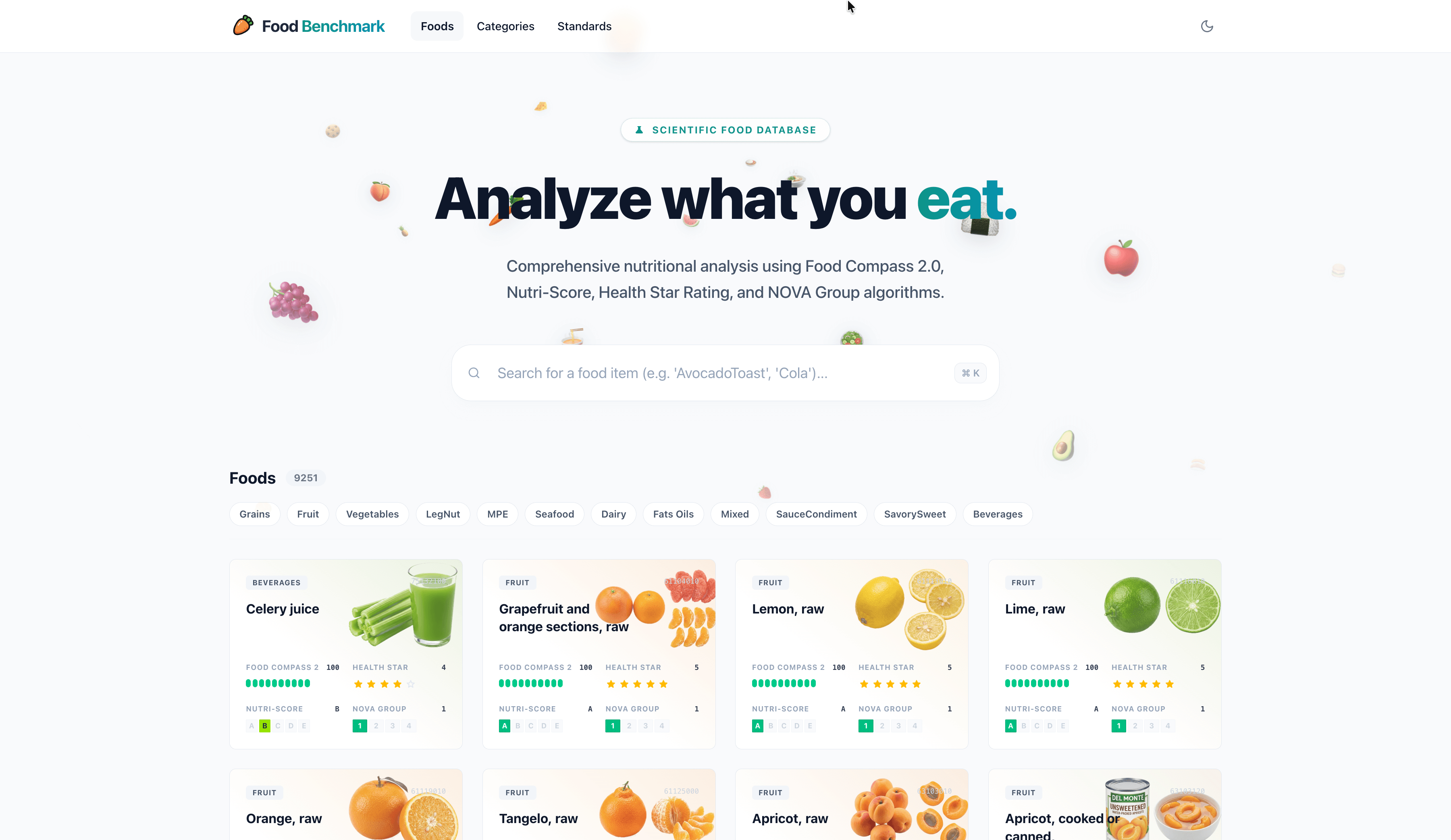
Integrated Health Scoring Frameworks: Beyond raw data, Food Benchmark translates numbers into actionable insights through integrated scoring systems. The Tufts Food Compass Score (on a scale of 1-100) provides a holistic health rating, while Nutri-Score (A-E) and Health Star Rating offer quick-reference guides. The NOVA classification helps users identify ultra-processed foods. This multi-faceted scoring approach caters to different user needs and regional preferences.
-
Developer-Friendly Data Access: While providing a clean user interface for end-users, the platform is built with an API-first mentality, serving as a powerful backend for developers building diet apps, meal planners, restaurant menu analyzers, or educational tools. It turns the complexity of sourcing and standardizing food data from multiple authorities into a simple, queryable service.
-
Comprehensive Product & Whole Food Database: The scope is vast, encompassing millions of commercial packaged products from Open Food Facts alongside thousands of whole, minimally processed foods from the USDA and academic research. This unique combination allows users to benchmark a homemade meal against a store-bought alternative, providing a complete picture of the food ecosystem.
Get Started
Getting started with Food Benchmark is straightforward. The web-based platform requires no installation or account creation for basic searches, aligning with its open-data philosophy. Simply visit the website and begin searching for any food—from specific fish varieties to branded snacks. The interface is designed for intuitive exploration, with visual cards displaying key scores and data points. For developers and businesses looking to integrate this data at scale, the platform likely offers API access (suggested by its structured data presentation), enabling programmatic queries to power custom applications. The tool's design emphasizes immediate utility, allowing users to gain insights from its aggregated intelligence within seconds of their first visit.